
Yard Grading 101: Improve Drainage and Avoid Costly Repairs

Grading your yard is one of the most effective landscape improvements that prevents costly property damage. Done right, proper yard grading keeps rain and snowmelt moving away from your house, eliminates standing water, and creates optimal growing conditions for plants.
This comprehensive guide walks through the fundamentals of residential yard grading, drainage solutions, and practical steps you can take, whether you’re considering a DIY project or planning professional land grading services.
What Is Yard Grading and Why Is It Essential for Proper Drainage?
Yard grading—also called land grading, lot grading, or landscape grading—means strategically shaping the ground surface so water flows away from structures instead of pooling near foundations or in landscape beds. Proper grading is your property’s first line of defense against water damage, foundation problems, and soil erosion.
How Does Proper Yard Slope Protect Your Home’s Foundation?
A correctly graded yard typically requires a 2% slope (approximately 1/4 inch of fall per linear foot) extending 6 to 10 feet from your foundation. This gentle pitch directs surface runoff away from the house and significantly reduces the risk of water infiltrating basements, crawl spaces, or foundation walls.
Without proper grading, homeowners face:
- Foundation cracks from hydrostatic pressure
- Basement moisture and mold growth
- Structural settling and movement
- Costly foundation repair bills ranging from $5,000 to $50,000
According to construction best practices and local building codes, maintaining positive drainage away from foundations is not just recommended; it’s often required for new construction and major renovations.
Understanding Positive vs. Negative Grading
Positive grading means your yard slopes away from your home, allowing gravity to move water safely toward streets, swales, or drainage systems.
Negative grading is when the yard tilts toward the house, creating a path for water to collect against foundation walls, a common cause of basement flooding and foundation damage.
Identifying which grading type you have is the critical first step in protecting your property from water damage.
What Are the Warning Signs of Poor Yard Drainage You Should Watch For?
Early detection of drainage issues saves thousands in repair costs. Here are the telltale signs your yard grading needs attention:
How to Identify Water Pooling, Soggy Spots, and Foundation Leaks
After heavy rain or snowmelt, inspect for:
- Standing water that remains 24+ hours after precipitation
- Spongy or saturated soil in low-lying areas
- Water stains on foundation walls
- Damp or musty odors in basements and crawl spaces
- Cracks in foundation walls or basement floors
- Water marks or efflorescence (white mineral deposits) on masonry
Walk your property systematically, noting problem areas near downspouts, low spots, shallow depressions, and anywhere water travels across your yard. Document these locations with photos and measurements. This information helps whether you’re DIY troubleshooting or consulting with drainage contractors.
What Are the Risks of Soil Erosion and Uneven Yard Surfaces?
Poor grading creates multiple problems beyond standing water.
Soil erosion strips away nutrient-rich topsoil, exposes plant roots and underground utilities, and can undermine hardscape features like patios and retaining walls.
Uneven surfaces create tripping hazards, make lawn maintenance difficult, and often indicate underlying drainage problems that will worsen over time.
Both conditions accelerate when left unaddressed, so stabilizing slopes and repairing low spots should be priorities in any grading improvement plan.
How to Grade a Yard: DIY Basics and When Professional Help Is Necessary
Small-scale grading projects are achievable for handy homeowners with basic tools and patience. However, knowing when to call professionals protects your investment and ensures long-lasting results.
DIY Yard Grading: Tools, Techniques, and Realistic Expectations
For minor grading corrections (areas under 500 square feet with gentle slopes):
Essential tools include:
- Flat-edged shovel and landscape rake
- Wheelbarrow for moving soil
- 6-8 foot straight board or laser level for checking slope
- Hand tamper or plate compactor for soil compaction
- Quality topsoil for building up low areas
Basic DIY grading process:
- Mark problem areas using stakes and string to establish desired slope lines
- Remove existing turf and debris from the work area
- Add and shape topsoil to achieve the target 2% grade
- Compact soil in 2-3 inch lifts to prevent future settling
- Verify slope with your level, making adjustments as needed
- Establish new lawn or landscape plantings to stabilize the grade
For hand-grading projects, work when the soil has moderate moisture, not bone-dry or saturated. Dry soil is difficult to work with and compact; overly wet soil becomes muddy and won’t compact properly.
When Is Professional Yard Regrading Necessary?
Hire experienced grading contractors when:
- The project affects your home’s foundation or utilities
- You need to move more than 10-20 cubic yards of soil
- The slope is steep (greater than 3:1 ratio)
- Drainage problems persist after initial DIY attempts
- Municipal permits or engineering plans are required
- The area includes retaining walls, underground utilities, or septic systems
Professional land grading services bring specialized equipment, skid steers, mini-excavators, laser-guided grading systems, plus the expertise to properly compact soil, integrate drainage systems, and ensure work meets local codes. At Model Landscape, our years of serving Utah homeowners mean we understand local soil conditions, seasonal challenges, and what solutions actually work long-term in our climate.
Which Yard Drainage Solutions Complement Proper Grading?
While correct grading forms the foundation of effective drainage, many properties need additional water management systems where runoff concentrates, or natural drainage is insufficient.
How Do French Drains, Catch Basins, and Dry Wells Work Together?
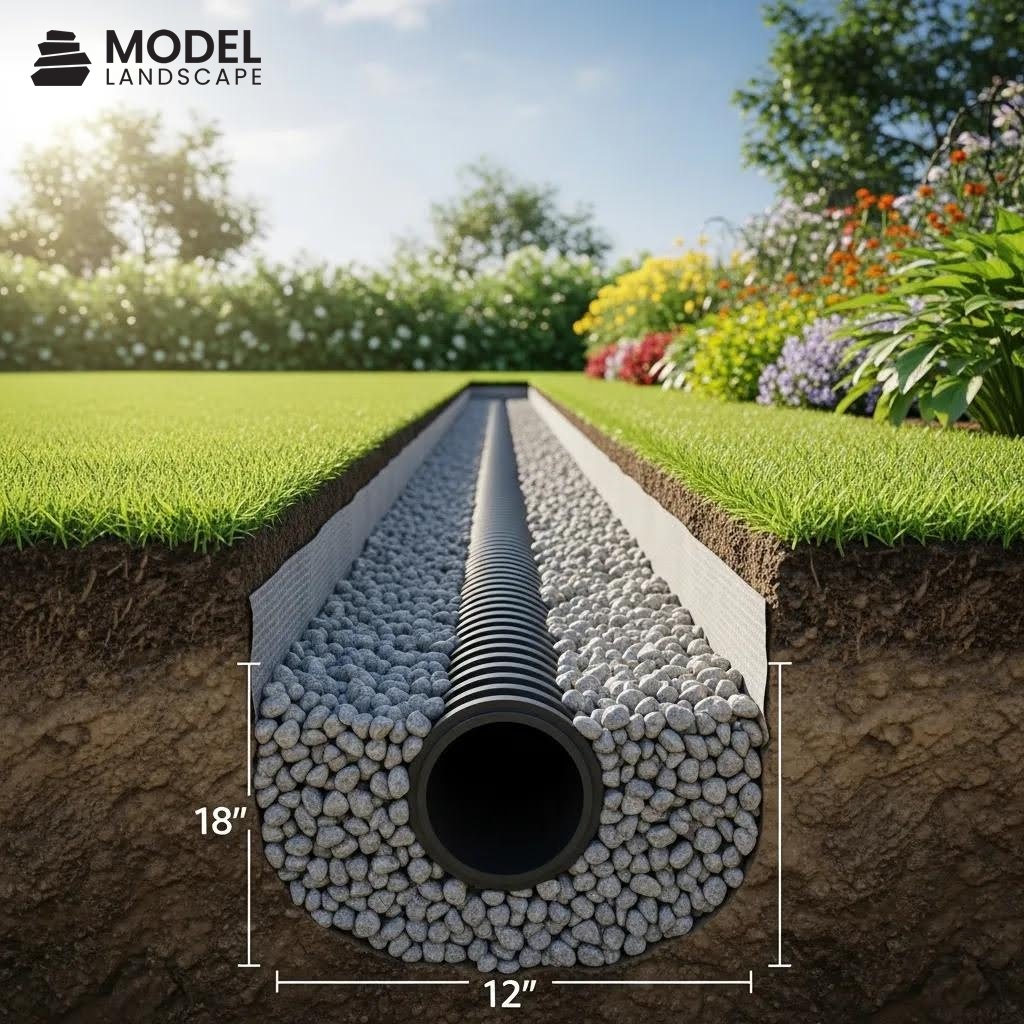
French drains consist of a gravel-filled trench containing a perforated pipe that collects and diverts subsurface water away from problem areas. They’re particularly effective for intercepting water moving downslope toward foundations and draining consistently wet areas in lawns or garden beds.
Catch basins (also called drain inlets or storm drains) gather surface runoff through grated openings and channel it into underground drainage pipes. Use catch basins where water naturally concentrates at low points, along driveways, or where multiple slopes converge.
Dry wells (or infiltration wells) provide a subsurface reservoir where excess water can slowly percolate into the surrounding soil away from structures. They work well where you can’t easily connect to municipal storm drains or when you want to capture roof runoff for groundwater recharge.
For comprehensive drainage solutions, these systems often work together: Catch basins collect surface water, drain pipes convey it away from the house, and dry wells or daylight outlets safely disperse it.
How to Integrate Drainage Systems with Sustainable Landscape Practices
Modern drainage design increasingly incorporates low-impact development (LID) approaches that work with natural water cycles:
Rain gardens (bioretention areas) slow runoff, filter pollutants, and create attractive landscape features using native, water-tolerant plants. Position them in natural low areas where water already wants to go.
Permeable paving—including porous concrete, permeable pavers, and decomposed granite allows water to infiltrate where traditional hardscapes create impervious surfaces. Use it for patios, pathways, and low-traffic driveways.
Native and deep-rooted plants improve soil structure, increase infiltration capacity, and require less supplemental irrigation once established. Species adapted to Utah’s climate handle both drought and occasional saturation better than non-native alternatives.
These green infrastructure solutions reduce strain on conventional drainage systems while creating healthier, lower-maintenance landscapes.
What Factors Influence the Cost of Yard Regrading and Drainage Installation?
Understanding cost drivers helps you budget realistically and make informed decisions about DIY versus professional services.
How Yard Size, Soil Type, and Slope Severity Affect Project Pricing
Primary cost factors include:
Area size: Larger regrading projects require more labor hours, equipment time, and materials. Small spot grading (under 500 sq ft) might cost $500-$1,500, while whole-yard regrading can range from $2,000 to $10,000+, depending on complexity.
Soil conditions: Heavy clay soils common in Utah valleys slow excavation, may require soil amendments, and are more difficult to achieve proper compaction. Rocky soils increase equipment wear and may necessitate the use of specialized machinery.
Slope severity: Gentle slopes (under 10%) are straightforward to regrade. Steeper grades require more careful engineering, possibly retaining walls or terracing, and take longer to stabilize safely.
Drainage infrastructure: Adding French drains typically costs $20-$50 per linear foot installed. Catch basins run $300-$800 each, including connection pipes. Dry wells range from $1,000-$3,000 depending on size and depth.
Access and site conditions: Equipment access affects pricing; tight spaces requiring hand work or smaller machines cost more per square foot than open yards accommodating full-size equipment.
Request detailed written estimates from multiple contractors, ensuring quotes include site preparation, materials, compaction, final grading, erosion control, and any required drainage installations.
How Does Utah’s Unique Climate Impact Yard Grading and Drainage Requirements?
Utah’s distinctive geography and weather patterns create specific challenges for landscape drainage that differ from those of other regions.
What Soil and Weather Challenges Are Common in Utah Landscapes?
Utah’s bentonite clay soils (prevalent along the Wasatch Front) expand when wet and shrink when dry, creating unique drainage challenges. These soils have extremely low permeability when saturated, causing surface water to pool rather than infiltrate.
Seasonal weather patterns bring concentrated challenges:
- Spring snowmelt produces sustained saturation and runoff over weeks
- Summer monsoons deliver intense rainfall in short periods
- Winter freeze-thaw cycles can damage drainage structures
- Extended dry periods cause soil shrinkage and cracking
How Does Local Expertise Improve Yard Grading Outcomes?
Working with Utah-based grading contractors provides distinct advantages:
- Understanding local clay characteristics and seasonal behavior
- Designing systems that handle both snowmelt and monsoon runoff
- Navigating municipal grading requirements and permit processes
- Knowing which drainage methods perform reliably in Utah conditions
At Model Landscape, our years of serving Utah homeowners mean we’ve seen every drainage challenge our climate presents. We design grading and drainage solutions that work year-round and hold up through freeze-thaw cycles.
Smart Grading Protects Your Home Investment
Proper yard grading protects your home from water damage while improving landscape health. By maintaining correct slopes, addressing problems early, and choosing solutions for Utah’s climate, you safeguard your property investment. With years of serving Utah homeowners, Model Landscape delivers grading and drainage systems that work year-round.
Ready to solve your drainage challenges? Contact Model Landscape for a professional assessment backed by years of proven results across Utah.
Frequently Asked Questions About Yard Grading and Drainage
1. What are the most common mistakes to avoid when grading a yard?
The most frequent errors include sloping toward the foundation, ignoring roof drainage patterns, and failing to properly compact soil. Always plan where water will go before moving soil, and avoid redirecting runoff onto neighboring properties.
2. How can I improve drainage in a yard with heavy clay soil?
Clay soils benefit from incorporating compost to improve structure and drainage. Combine soil amendments with French drains or catch basins that intercept water before the clay becomes saturated.
3. What role do plants play in managing yard drainage?
Plants improve drainage through root systems that create infiltration pathways, foliage that slows rainfall impact, and transpiration that removes soil moisture. Deep-rooted native species work best in Utah conditions.
4. Can I incorporate rain barrels into my drainage solution?
Yes, rain barrels capture roof runoff, reducing storm drainage needs while providing irrigation water. Ensure overflow is directed away from foundations. Check local codes, as some municipalities regulate rainwater collection.
5. What are the long-term consequences of ignoring poor yard drainage?
Neglected drainage leads to foundation damage, basement mold, dying landscape plants, soil erosion, and reduced property value. Addressing drainage early prevents compounding damage and escalating costs.
Table of Contents
We’d love to talk. Reach out and one of our friendly representatives will be happy to help you.
Model Landscape turns ordinary lawns into extraordinary outdoor escapes. Our experts handle every detail with precision and passion. Get your personalized landscaping plan today and elevate your home’s natural charm!